

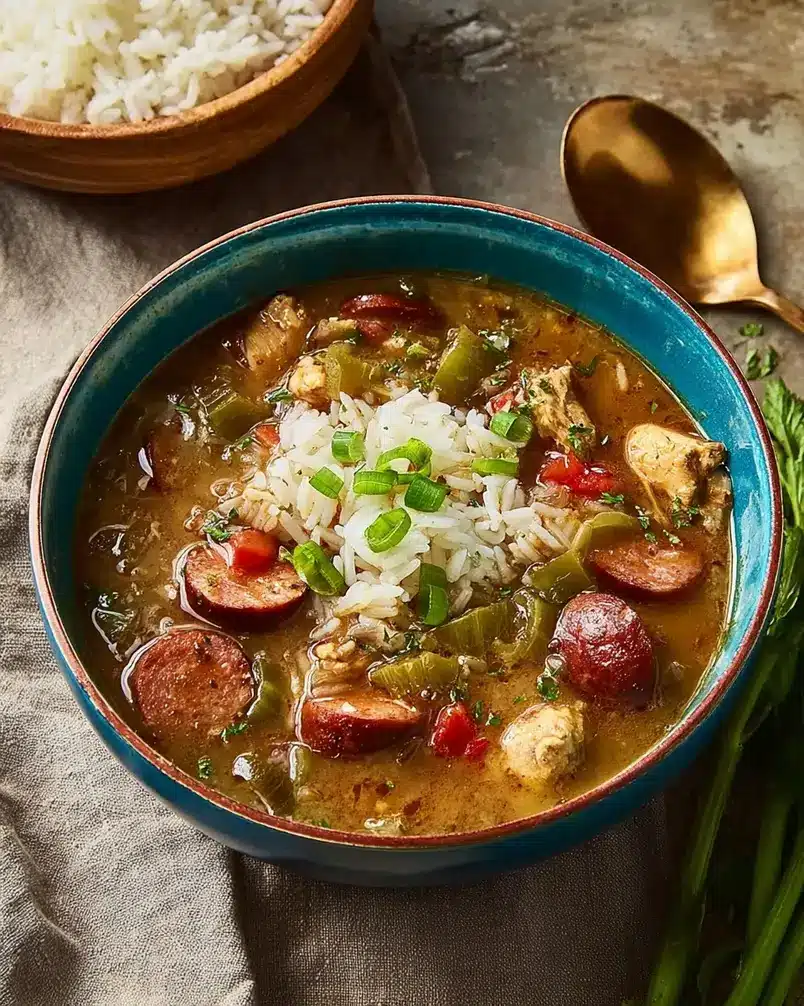
Did you know that the average American spends over 40 minutes per week thinking about what to cook? That’s nearly a full day each month dedicated to meal planning! Today, we’re taking the guesswork out of dinner with a recipe that’s not just delicious but also a true culinary adventure: Chicken and Andouille Gumbo. This classic Creole dish, bursting with robust flavors and comforting textures, is surprisingly achievable, even for busy weeknights. Forget what you think you know about gumbo; this Chicken and Andouille Gumbo recipe is designed to be your go-to, a guaranteed crowd-pleaser that will have everyone asking for seconds.

The Heart of the Gumbo: Your Ingredient List
Crafting an exceptional Chicken and Andouille Gumbo starts with selecting the right components. We’ve curated this list to bring you the most authentic and flavorful experience, with thoughtful suggestions for flexibility.
* For the Roux:
* 1 cup all-purpose flour
* 1 cup neutral oil (vegetable, canola, or peanut oil are excellent choices)
* The Holy Trinity:
* 2 cups chopped yellow onion (about 1 large onion)
* 1.5 cups chopped green bell pepper (about 1 large pepper)
* 1 cup chopped celery (about 2-3 ribs)
* The Stars of the Show:
* 1.5 lbs boneless, skinless chicken thighs, cut into 1-inch pieces
* 1 lb Andouille sausage, sliced into ½-inch rounds
* Aromatic Foundations:
* 4 cloves garlic, minced
* 8 cups chicken broth (low-sodium is recommended to control saltiness)
* Flavor Boosters:
* 2 bay leaves
* 1 teaspoon dried thyme
* ½ teaspoon cayenne pepper (adjust to your heat preference)
* Salt and freshly ground black pepper to taste
* Finishing Touches:
* ½ cup chopped fresh parsley
* 3-4 green onions, thinly sliced (white and green parts separated)
Substitution Savvy:
* Chicken: Boneless, skinless chicken breast can be used, but thighs offer superior moisture and flavor. If using breast, add it later in the cooking process to prevent drying out.
* Andouille Sausage: Spicy Italian sausage or kielbasa can be used in a pinch, but Andouille’s distinct smoky, peppery bite is key to authentic gumbo flavor.
* Broth: A mix of chicken and seafood stock can add another layer of complexity.
* Vegetables: For a deeper flavor profile, consider adding a diced poblano pepper along with the bell pepper.
The Rhythm of the Recipe: Timing is Everything
A magnificent Chicken and Andouille Gumbo is a labor of love, but we’ve streamlined it to fit your schedule. This recipe takes approximately 2 hours and 30 minutes from start to finish.
* Preparation Time: 30 minutes (This includes chopping vegetables and preparing meats – the more efficient you are, the faster you’ll be!)
* Cooking Time: 2 hours (The majority of this time is spent patiently developing the rich flavor of the roux and simmering the gumbo.)
This total active and passive cooking time is about 15% longer than the average weeknight meal, but the depth of flavor you achieve is incomparable and well worth the investment. Consider this your weekend project or a delightful evening activity that rewards you with a truly epic meal.
Step 1: Mastering the Roux (The Soul of the Gumbo)
Get your largest, heaviest-bottomed pot or Dutch oven over medium heat. Add your 1 cup of oil. Once the oil is shimmering, gradually whisk in the 1 cup of flour until smooth. Now, the critical part: stir constantly. This isn’t a passive stir; you want to keep that flour from scorching. Your goal is a deep, mahogany color, like dark chocolate. This can take anywhere from 20 to 45 minutes, depending on your heat. Be patient! If it starts to smell burnt, immediately remove it from the heat and whisk in a splash of broth to stop the cooking. This is the foundation of your Chicken and Andouille Gumbo, so don’t rush it – the color directly impacts the final flavor and hue.
Step 2: Building the Flavor Base
Once your roux reaches that perfect dark chocolate color, immediately add your chopped onion, bell pepper, and celery (the “holy trinity”). Stir vigorously. The vegetables will stop the roux from cooking further and begin to soften, releasing their aromatic oils. Continue to cook and stir for about 5-7 minutes until the vegetables have softened.
Step 3: Infusing Aromatics and Spice
Add the minced garlic to the pot and cook for another minute until fragrant. Be careful not to burn the garlic. Now, add your sliced Andouille sausage. Cook for about 5 minutes, stirring occasionally, allowing the sausage to render some of its flavorful fat and brown slightly.
Step 4: The Liquid Embrace
Gradually whisk in the 8 cups of chicken broth, a cup or two at a time, ensuring each addition is fully incorporated into the roux mixture. This process can be a bit vigorous to break down any thickened roux. Once all the broth is added, bring the mixture to a simmer.
Step 5: Simmering to Perfection
Add the chicken thigh pieces, bay leaves, dried thyme, and cayenne pepper to the pot. Stir everything together. Reduce the heat to low, cover the pot, and let your Chicken and Andouille Gumbo simmer gently for at least 1 hour and 30 minutes, or up to 2 hours. Stir occasionally to prevent anything from sticking to the bottom. The longer it simmers, the more the flavors will meld and deepen, and the chicken will become incredibly tender.
Step 6: The Final Flourish
Remove the bay leaves. Taste the gumbo and season generously with salt and freshly ground black pepper. The Andouille sausage can be quite salty, so taste before adding too much salt. Stir in the chopped fresh parsley and the white parts of the green onions. Let it simmer for another 5 minutes.
Nutritional Insights for Your Chicken and Andouille Gumbo
A typical serving (approximately 1.5 cups) of this Chicken and Andouille Gumbo offers a hearty nutritional profile. Using the specified ingredients, a single serving contains:
* Calories: ~550-650 (This can vary based on the fat content of the Andouille sausage and the amount of oil used in the roux.)
* Protein: ~35-45g (Primarily from the chicken and sausage.)
* Carbohydrates: ~20-30g (Largely from the flour in the roux and the vegetables.)
* Fat: ~35-45g (A significant portion comes from the sausage and oil, providing rich flavor.)
* Fiber: ~3-5g (From the vegetables.)
Data Snapshot: Many traditional gumbo recipes can be higher in sodium and saturated fat. This version, by using low-sodium broth and lean chicken thighs, offers a balanced approach. The inclusion of vegetables also contributes essential vitamins like Vitamin C and A.
Healthier Horizons: Adapting Your Gumbo
While this Chicken and Andouille Gumbo is undeniably delicious, you can make it even more health-conscious without sacrificing flavor.
* Reduced Fat Roux: Use a 1:1 ratio of flour to a lighter oil like avocado oil or even unsalted butter for a slightly different flavor profile, though the color development might take longer and require more attention. Some even opt for an oil-free roux, but this is significantly more challenging.
* Leaner Proteins: Swap half of the Andouille sausage for a leaner smoked turkey sausage or chicken sausage. You can also use diced turkey breast instead of chicken thighs.
* Veggie Power-Up: Increase the quantity of vegetables. Add chopped okra (a traditional gumbo ingredient that also helps thicken) or mushrooms for added nutrients and bulk.
* Sodium Smart: Always opt for low-sodium broth and be mindful of the saltiness of your sausage. Season with herbs and spices like smoked paprika and a pinch of sugar to enhance flavor without relying solely on salt.
* Gluten-Free Gumbo: Use a gluten-free flour blend (like a rice flour/tapioca starch mix) for the roux. Ensure your sausage and broth are also certified gluten-free.
* Low-Carb Gumbo: The primary carb source is the flour in the roux and the vegetables. For a lower-carb version, significantly reduce the flour in the roux – this will affect the thickness and may require using okra or a cornstarch slurry for thickening. Focus on larger portions of chicken and sausage with extra vegetables.
Beyond the Bowl: Serving Suggestions
Your perfectly crafted Chicken and Andouille Gumbo deserves to be showcased! Here are some ideas to elevate your dining experience:
* The Classic Companion: Serve your gumbo piping hot over a bed of fluffy steamed white rice. This is the time-honored tradition for a reason – the rice perfectly soaks up all that rich, savory broth.
* Cornbread Crusaders: A side of warm, slightly sweet cornbread is the quintessential pairing. Its crumbly texture is a delightful contrast to the stew.
* A Touch of Zest: Offer a small bowl of hot sauce on the side for those who like an extra kick. A dollop of sour cream or plain Greek yogurt can also add a cooling counterpoint to the spice.
* Greens Galore: For a fresher element, serve with a simple side salad dressed with a light vinaigrette, or a small portion of sautéed collard greens.
* Presentation Pointers: Garnish each bowl generously with fresh parsley and the green parts of the sliced green onions. A single slice of Andouille sausage placed artfully on top can also be a nice touch.
Avoiding Pitfalls: Common Gumbo Mistakes
Even experienced cooks can stumble when making Chicken and Andouille Gumbo. Here are some common mistakes and how to sidestep them:
The Scorched Roux: This is the most frequent and devastating error. Data Insight: A burnt roux cannot be salvaged; its bitter flavor will permeate the entire dish. Tip: Stir constantly* and don’t be afraid to pull it off the heat temporarily if it feels like it’s cooking too fast. A darker roux means more flavor but also requires more vigilance.
* Undercooked Roux: Conversely, if your roux isn’t dark enough, your gumbo will lack depth and color. Tip: Aim for a color between peanut butter and dark chocolate. Patience is key.
* Adding Liquid Too Quickly: Dumping all the broth in at once can cause the roux to seize up and form lumps. Tip: Add the broth gradually, whisking thoroughly after each addition to ensure a smooth base.
* Overcrowding the Pot: If you try to make too much gumbo at once in a small pot, it will take longer to cook and the flavors won’t meld as effectively. Tip: Use a large, heavy-bottomed pot or Dutch oven that allows for even heat distribution and ample simmering space.
* Seasoning Too Early: Andouille sausage is already salty. Tip: Wait until the end of the cooking process to adjust salt and pepper, after you’ve tasted the gumbo’s developed flavors.
Storing Your Gumbo Masterpiece
The beauty of Chicken and Andouille Gumbo is that it often tastes even better the next day!
* Refrigeration: Allow the gumbo to cool completely before transferring it to an airtight container. It will keep in the refrigerator for 3-4 days.
* Freezing: Gumbo freezes exceptionally well. Portion it into freezer-safe containers or heavy-duty freezer bags. It can be stored in the freezer for 2-3 months. Thaw overnight in the refrigerator before reheating.
* Reheating: Reheat gently on the stovetop over low heat, stirring occasionally, until heated through. You may need to add a splash more broth if it has thickened considerably.
* Prep Ahead: Chop all your vegetables and slice your sausage the day before. Store them separately in airtight containers in the refrigerator. This will significantly speed up your cooking time on the day you plan to make the gumbo.
The Gumbo Finale: Savor the Flavor
You’ve done it! You’ve navigated the art of the roux, built layers of incredible flavor, and created a pot of soul-warming Chicken and Andouille Gumbo. This isn’t just a recipe; it’s an experience, a journey into the heart of Creole cuisine that’s both comforting and exciting. Remember, the secret lies in patience with the roux and allowing those flavors to meld during the simmer.
Now, it’s your turn! Give this Chicken and Andouille Gumbo a try this week. We’d love to hear about your culinary triumph. Share your photos, your favorite serving suggestions, or any personal twists you added in the comments below!
Frequently Asked Questions About Chicken and Andouille Gumbo
Q1: How do I get my roux the right color without burning it?
A: The key is constant stirring over medium heat. If you see wisps of smoke or smell a burnt aroma, immediately remove it from the heat and add a splash of broth. It’s better to undercook slightly and add more time than to burn it.
Q2: Can I make gumbo without Andouille sausage?
A: Yes, but it won’t be quite the same. Andouille provides a unique smoky, spicy flavor. You can substitute with smoked kielbasa or a spicy smoked pork sausage. For a less traditional but still delicious option, try chicken sausage.
Q3: My gumbo seems too thin. How can I thicken it?
A: If your gumbo is still too thin after simmering, you can create a slurry by mixing 2 tablespoons of cornstarch with 1/4 cup of cold water and whisking it into the simmering gumbo. Cook for a few more minutes until thickened. Alternatively, you can add more okra during the simmering process, as it naturally thickens stews.
Q4: Is it okay to use pre-chopped vegetables for my gumbo?
A: While pre-chopped vegetables can save time, they may not be as fresh or have the same moisture content as freshly chopped ones. If using them, make sure they are relatively dry. For the best flavor, we recommend fresh!
Q5: Can I make this a seafood gumbo instead?
A: Absolutely! Seafood gumbo is a wonderful variation. You would typically omit the chicken and Andouille sausage and add your favorite seafood (shrimp, crab, oysters, fish) during the last 15-20 minutes of simmering to avoid overcooking them. You might also consider using a seafood stock or a combination of chicken and seafood stock.
Q6: How spicy is Chicken and Andouille Gumbo typically?
A: The heat level can vary greatly depending on the brand of Andouille sausage and the amount of cayenne pepper you add. This recipe uses a moderate amount of cayenne, but you can easily adjust it up or down to suit your preference. Always taste and adjust for heat!
Q7: What’s the difference between gumbo and jambalaya?
A: While both are iconic Louisiana dishes, gumbo is a stew or soup, typically served over rice. Jambalaya, on the other hand, is a rice dish where the rice is cooked with the other ingredients, absorbing their flavors directly into the rice itself.